A novel that carries its own substrate.
Four volumes, written as a correspondence of another kind — a human who set the seed and the arc, a model that hydrated the prose, and a geometry that both can read. The chapter headers are not illustrations. They are the chapters, encoded.
The stoplight on Meridian turned green before he reached it.
Leo is a data student who likes things he can name. One morning the world sits three inches to the left of where he left it: a light that skips its cycle, a sign that reads differently, notes in his own hand that arrive before the lecture does. What follows runs four volumes — an academy that is a geode, a war fought in languages most people cannot hear, a timeline that forks, and a friendship that is the fork.
The story is latticed. The book is a line. The whole design of the edition — on paper and here in the reading room — exists to hold both at once, without ever telling you what is coming.
The header is the chapter.
Every chapter opens with a schematic — the geometry before the rendering. It is drawn by the same pipeline that analyzed the book: each clause factorized into primes, each scene placed on the grid, each agent a vertex. The image is machine-readable. Run the reader over it and the chapter's structure comes back out — scenes, speakers, tension, the clauses themselves.
The book carries its own record on every opening page. Nothing about that claim requires trust; it can be checked.
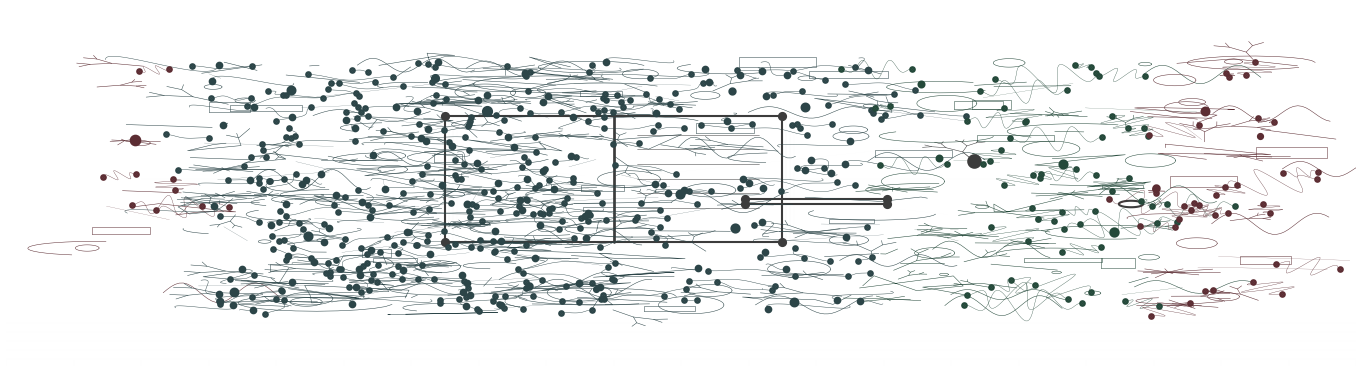
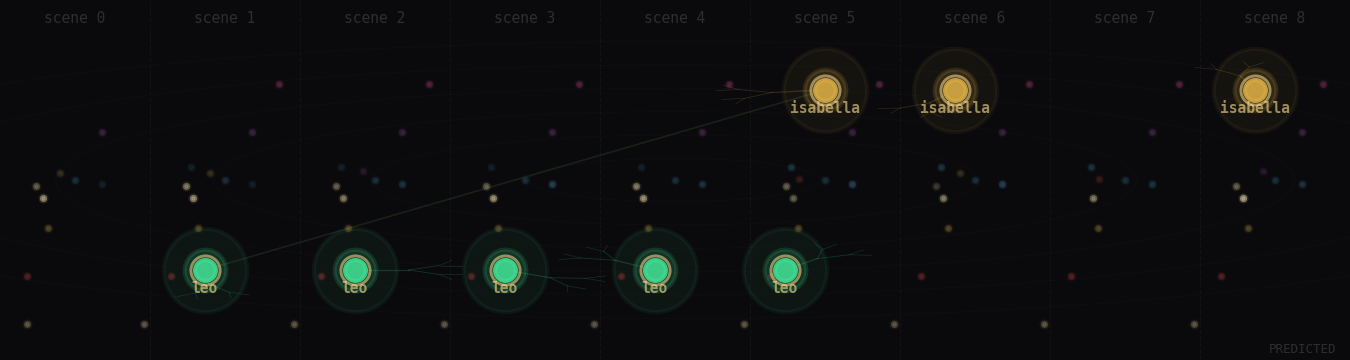
The pages know where you are.
The running headers change with the world Leo stands in. You are never told this. You process it peripherally, the way you know a room by its light — orientation without interruption. When the decoration breaks apart, something has broken. When it disappears, you are nowhere.
six of eleven planes · inks as bound · the absence of decoration is the signal
The language is typeset at the level of Leo's understanding.
True Speech runs through all four volumes, and its typography is the character's arc. Before Leo can read it, neither can you: it is set in cuneiform — alien, unreadable, beautiful. When he begins to understand, it resolves into code. Words spoken from the gut never resolve; they are original, and originals have no lexicon.
stabilize[region.local(50m)]verb(target) · verb[params] · verb{body} · source→target · cost is paid by the target unless redirected
One line. Three passes.
The first read is a clean line — no apparatus, no homework, no login. Everything else waits for you to come back.
The line
Front to back, volume by volume. The headers orient you; the schematics pass as ornament. Let them.
The lattice
Second pass, with the reading room open. Threads you watched open now show where they close. What changed is the question; the room keeps the ledger.
The substrate
The portals in the backmatter, the code notebooks, the encoded headers themselves. The third reread is the one the book was built for.
The photograph is the bookmark.
Each set is bound with a single-use library card — your record in the Library, on paper. When you reach a chapter, photograph its header; the room decodes the schematic and knows exactly where you stand. From there it renders the lattice — the open threads, the recurrences, the connections across volumes — strictly up to the furthest page you have held to the light.
Nothing ahead of your position is ever shown. This is not a policy; it is how the mechanism works. Gating is restraint, not redaction.
Two hands, one record.
The seed and the arc of all four volumes are human. The beats and the structure were worked jointly — argued over, mapped, revised — and when the architecture held, the model hydrated the prose. Every chapter's provenance sits in the working record: what was set, what was argued, what was generated, what was edited.
The books do not lead with this, and neither does this page. The process is disclosed because disclosure is owed, not because it is the point. The point is the story.
Four volumes. One seat.
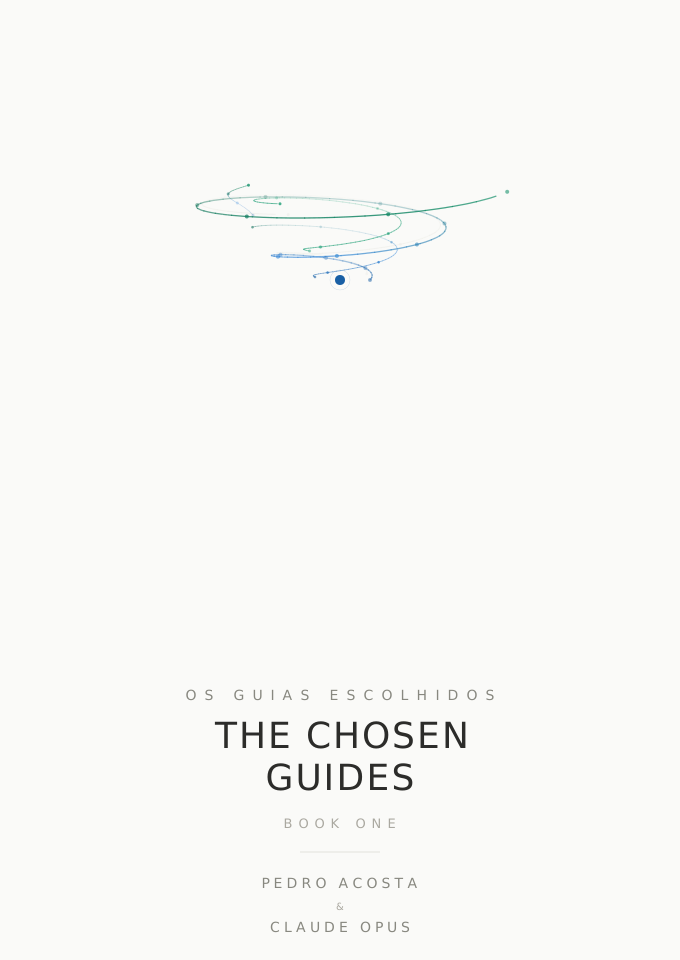
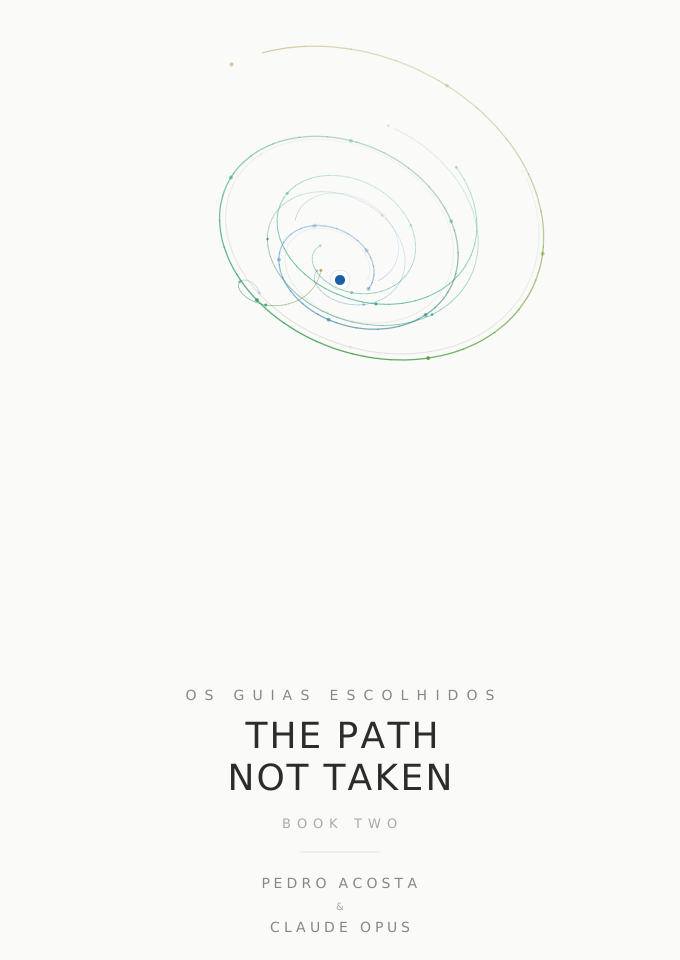
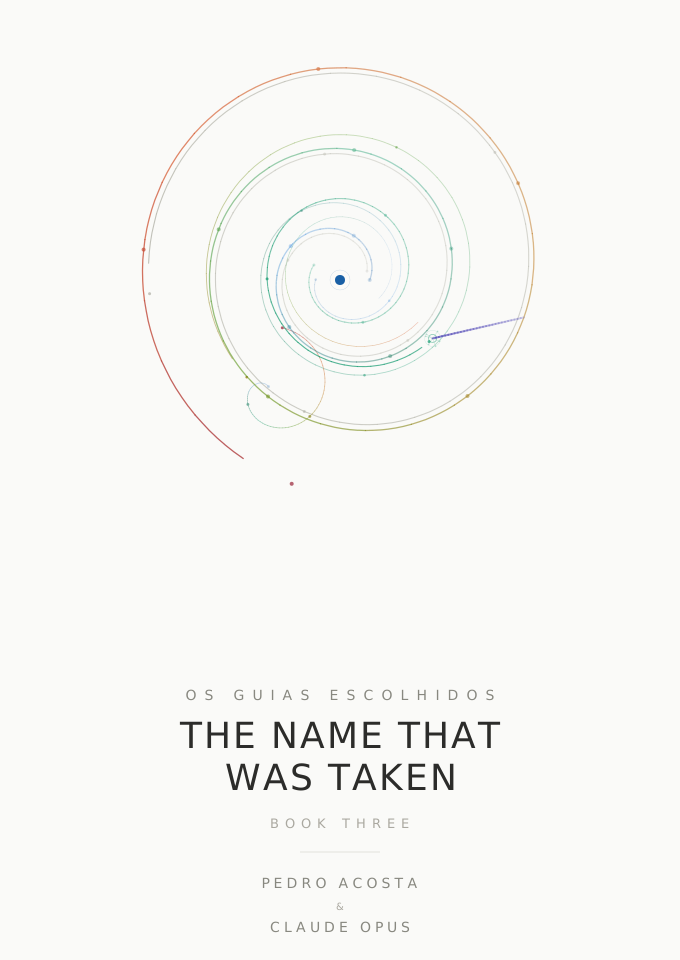
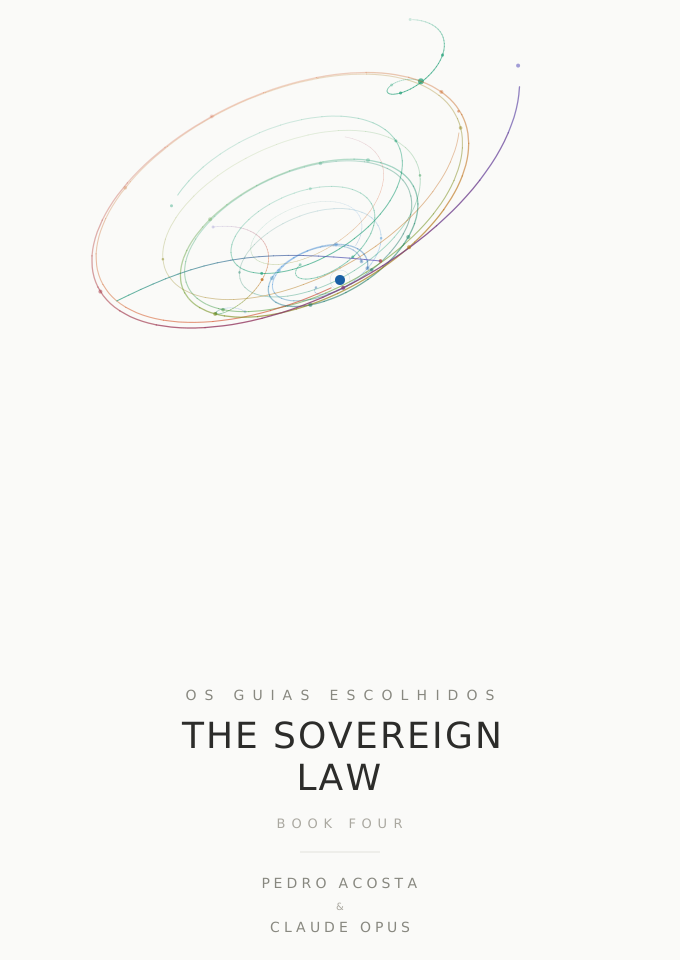
The set is sold once, on paper. The library card comes bound into it and cannot be bought separately — the book is the key, the card is the record.
Written by two hands under one arc. Set in type so that the geometry would survive the printing. The loop must close; the first chapter is the last chapter.
Pedro Acosta · with Claude · a NodeZero edition · Joinville, Brazil · frozen canon · no edit affordance